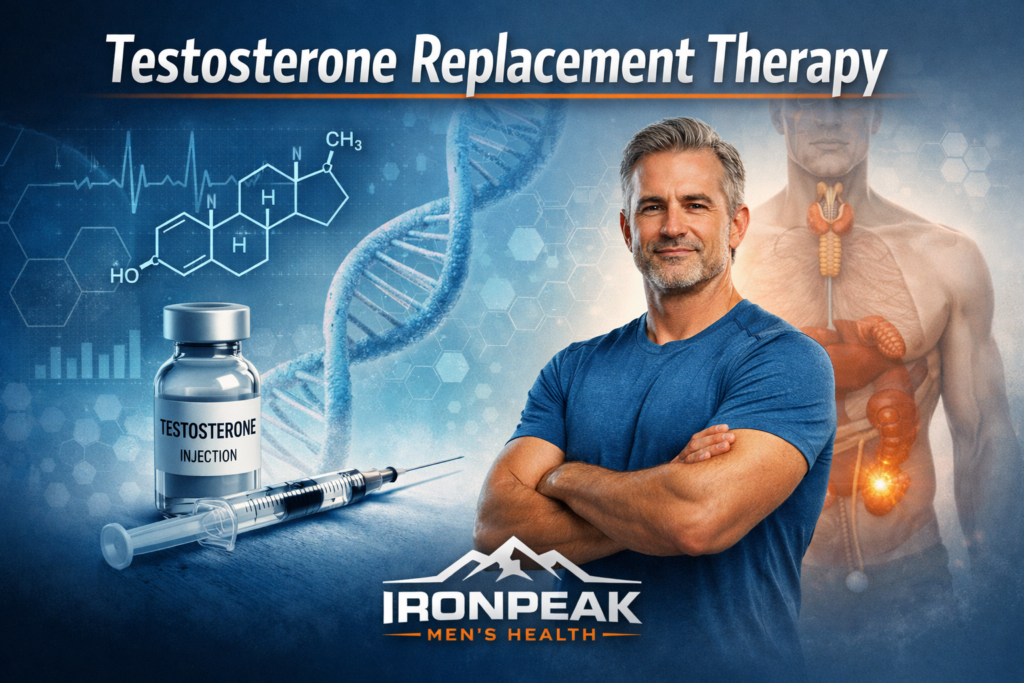
Testosterone is a key hormone in men’s health. It plays an important role in sexual function, muscle mass, bone density, mood, energy levels, red blood cell production, and metabolic health. While testosterone levels naturally decline with age, some men develop levels low enough to cause meaningful symptoms and health consequences.
This article reviews what medical research shows about low testosterone, the potential benefits of testosterone replacement therapy (TRT), and the known risks when therapy is not properly selected or monitored.
What Is Low Testosterone?
Low testosterone, also called hypogonadism, is diagnosed when a man has symptoms consistent with testosterone deficiency and repeated low morning testosterone levels on blood testing.
Most professional societies consider total testosterone levels below approximately 300 ng/dL to support the diagnosis when symptoms are present; however, some men may experience significant symptoms at levels as high as 600 ng/dL.
Common symptoms include:
- Reduced libido and sexual satisfaction
- Erectile dysfunction
- Fatigue and low motivation
- Depressed mood or irritability
- Decreased muscle mass and strength
- Increased body fat
- Poor exercise recovery
- Low bone density or osteoporosis
- Unexplained anemia
Health Risks of Untreated Low Testosterone
Sexual Health and Quality of Life
Low testosterone is strongly associated with reduced libido and sexual dysfunction, which can significantly affect quality of life and relationships.
Bone Health
Men with low testosterone have reduced bone mineral density and a higher risk of osteoporosis and fractures over time.
Metabolic Health
Low testosterone is associated with insulin resistance, metabolic syndrome, and type 2 diabetes.
Cardiovascular Health and Mortality
Large observational studies consistently show that men with low testosterone have higher rates of cardiovascular disease and all-cause mortality. While these studies do not prove that low testosterone is the direct cause, low levels appear to be an important marker of overall health risk.
Benefits of Testosterone Replacement Therapy
Sexual Function
TRT reliably improves sexual desire and may improve erectile function in men with confirmed testosterone deficiency.
Body Composition
Testosterone therapy increases lean muscle mass and reduces fat mass. These changes are most effective when combined with resistance training, adequate protein intake, and healthy sleep habits.
Anemia
TRT has been shown to increase hemoglobin levels and correct anemia in men with testosterone deficiency.
Bone Density
Testosterone therapy increases bone mineral density. However, recent large clinical trials show that increased bone density does not necessarily result in fewer fractures.
Energy and Mood
Some men experience improvements in energy, motivation, and mood, though responses vary between individuals.
Risks and Side Effects of TRT
Fertility Suppression
TRT suppresses the body’s natural testosterone production and can significantly reduce or eliminate sperm production. Men who wish to preserve fertility should discuss alternative treatment options before starting therapy.
Elevated Hematocrit
Testosterone can increase red blood cell production, leading to elevated hematocrit levels. This is one of the most common and important risks and requires regular monitoring.
Blood Pressure Increases
Testosterone therapy can raise blood pressure. This risk is now included in FDA-mandated labeling for testosterone products.
Cardiovascular Events
Large randomized trials show that TRT does not increase major adverse cardiovascular events when appropriately prescribed. However, higher rates of atrial fibrillation, pulmonary embolism, and acute kidney injury have been observed, highlighting the importance of careful patient selection and monitoring.
Prostate Health
TRT does not appear to cause prostate cancer, but prostate monitoring remains important, particularly in aging men.
Other Potential Side Effects
- Acne or oily skin
- Fluid retention
- Gynecomastia
- Testicular shrinkage
- Worsening of untreated sleep apnea
- Hair loss acceleration in genetically predisposed men
Who Is an Appropriate Candidate for TRT?
TRT is most appropriate for men who:
- Have symptoms of testosterone deficiency
- Have confirmed low testosterone on repeat testing
- Have addressed lifestyle and medical factors that can lower testosterone
TRT is generally not recommended for men with normal testosterone levels, men actively trying to conceive, or those with certain uncontrolled medical conditions.
What Safe and Responsible TRT Looks Like
Appropriate TRT includes:
- Proper diagnostic testing
- Identification of the underlying cause of low testosterone
- Individualized dosing
- Regular laboratory monitoring
- Ongoing assessment of benefits and side effects
When done correctly, TRT is a medical therapy and should be managed with the same care as any long-term hormone treatment.
Bottom Line
Testosterone replacement therapy can meaningfully improve quality of life for men with true testosterone deficiency. Benefits are most consistent for sexual health, body composition, anemia, and bone density. TRT is not appropriate for every man and is not a cure-all for fatigue or weight gain.
The safest and most effective outcomes occur when TRT is prescribed thoughtfully, monitored carefully, and combined with healthy lifestyle habits.
How IronPeak Men’s Health Approaches Testosterone Therapy
At IronPeak Men’s Health, testosterone replacement therapy is not about chasing numbers or quick fixes—it’s about restoring normal physiology safely and intelligently. We start with a comprehensive evaluation that looks beyond total testosterone alone, including symptoms, metabolic health, body composition, sleep, and long-term risk factors. When TRT is appropriate, our goal is to optimize energy, strength, body composition, and cognitive function while preserving cardiovascular health, fertility considerations when relevant, and overall longevity.
Our approach emphasizes proper dosing, regular lab monitoring, and integration with lifestyle, nutrition, and training—because testosterone works best when the rest of the system is aligned. If you’re experiencing fatigue, low motivation, reduced muscle mass, brain fog, or diminished performance, IronPeak helps you address the root causes with evidence-based care designed for sustainable results, not shortcuts.
References
- American Urological Association. Evaluation and Management of Testosterone Deficiency. J Urol. 2018;200(2):423–432.
- Bhasin S, et al. Testosterone Therapy in Men With Hypogonadism: An Endocrine Society Clinical Practice Guideline. J Clin Endocrinol Metab. 2018;103(5):1715–1744.
- Snyder PJ, et al. Effects of Testosterone Treatment in Older Men. N Engl J Med. 2016;374:611–624.
- Lincoff AM, Bhasin S, Flevaris P, et al. Cardiovascular Safety of Testosterone-Replacement Therapy (TRAVERSE Trial). N Engl J Med. 2023;389:107–117.
- Corona G, et al. Low Testosterone Is Associated With an Increased Risk of Metabolic Syndrome and Diabetes. Diabetes Care. 2011;34(7):1669–1675.
- Snyder PJ, Kopperdahl DL, Stephens-Shields AJ, et al. Effect of Testosterone Treatment on Volumetric Bone Density and Strength in Older Men With Low Testosterone. JAMA Intern Med. 2017;177(4):471–479.
- FDA Drug Safety Communication. FDA Updates Labeling for Testosterone Products Regarding Blood Pressure Risk. U.S. Food and Drug Administration, 2023.